Protein Supplements: Who Needs Them and How to Use Them
Published: May 26, 2026
Contains affiliate links — we earn a small commission if you buy through them, at no extra cost to you. We only recommend products we genuinely use.
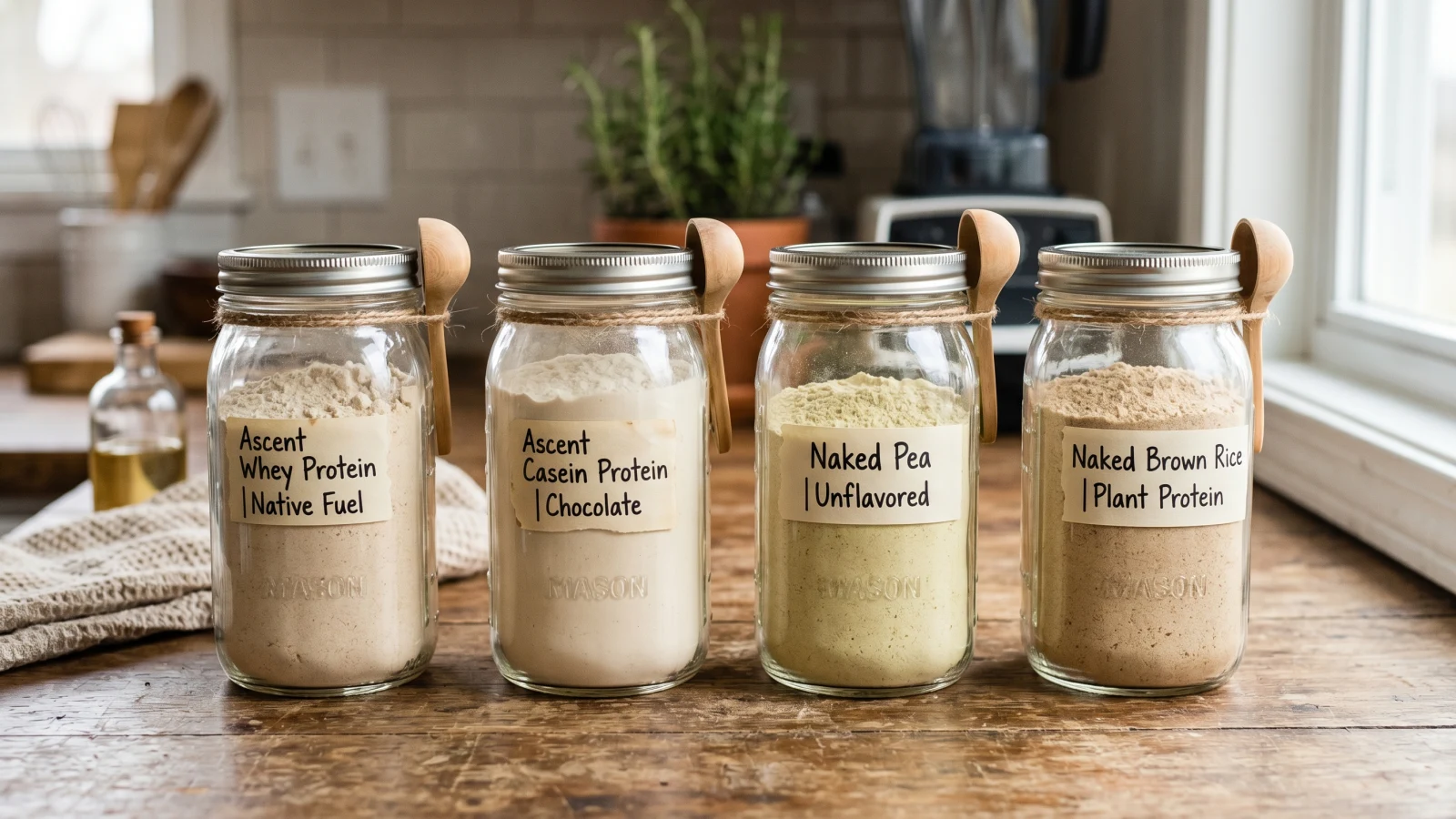
Product images were staged using AI for visual presentation purposes.
This article is for informational purposes only and is not a substitute for professional medical advice. Consult a healthcare provider before making significant changes to your diet or supplement routine.
At a glance
- Protein supplements are genuinely useful for people in a calorie deficit, active individuals with high targets, and older adults
- Sedentary people already eating adequate protein from food probably don't need them
- Whey is best for post-workout; casein works well before bed; pea+rice covers plant-based needs
- Active adults need 0.7–1g per pound of bodyweight; muscle-building goals push toward 1–1.2g/lb
- Total daily protein intake matters more than timing, but timing isn't irrelevant
Who Actually Benefits from Protein Supplements?
The supplement industry has an obvious interest in making protein powder seem universally necessary. It isn’t. But for specific groups, it’s genuinely one of the most useful dietary tools available. Here’s who actually benefits.
People in a Calorie Deficit
When you eat less than you burn, your body can break down muscle for energy, unless protein intake is high enough to prevent it. Research consistently shows that higher protein intake during a calorie deficit preserves lean mass better than lower protein intake at the same calorie level. The practical problem: eating 140–160g of protein per day while staying within a reduced calorie budget is genuinely difficult from food alone without either exceeding your calorie target or eating the same six foods every day.
Protein powder solves this cleanly. A scoop of whey delivers 25g of protein for roughly 100–120 calories, with minimal carbs and fat. It fills the protein gap without filling the calorie budget.
Active People with High Protein Targets
Protein requirements increase with exercise volume. Someone lifting weights 4–5 times per week and running regularly may need 150–200g of protein per day depending on their bodyweight — a target that’s cumbersome to hit from whole foods alone while managing work, family, and the general chaos of a normal life. A shake or two per day closes the gap efficiently.
Older Adults
This is probably the most under-discussed use case. Muscle protein synthesis (the process by which your body builds and maintains muscle) becomes less efficient with age. Older adults need more protein per pound of bodyweight than younger adults to achieve the same muscle-preserving effect, a phenomenon called “anabolic resistance.” Research suggests adults over 65 benefit significantly from higher protein intakes — around 0.7–0.8g per pound of bodyweight, trending toward 1g per pound of lean mass for those actively working to preserve muscle — and protein supplementation is one of the most practical ways to hit those targets.
People Who Struggle to Eat Enough Protein From Food
Some people simply find high-protein whole foods unappetizing, expensive, or inconvenient to prepare consistently. If you don’t enjoy meat, can’t afford to eat fish and chicken every day, or travel frequently, a protein supplement is a practical bridge, not a crutch.
People on GLP-1 Medications
GLP-1 drugs like Ozempic and Wegovy dramatically suppress appetite, which makes hitting protein targets significantly harder. When you’re comfortably eating only 800–1,200 calories a day, there’s very little room to fit 100+ grams of protein from whole foods. A protein shake becomes one of the most calorie-efficient tools available: 25g of protein for 100–120 calories. For a detailed breakdown of why protein matters so much on these medications and how to prioritize it, see our guide on protein tracking on GLP-1.
Who Probably Doesn’t Need It
If you’re sedentary, eating adequate protein from whole foods (chicken, eggs, legumes, dairy), and not in a meaningful calorie deficit, protein powder won’t do much for you that food isn’t already doing. The money is better spent on food quality. Supplements supplement a diet. They don’t transform one.
How Much Protein Do You Actually Need?
This is one of the most argued questions in nutrition, with legitimate variation based on goals and activity level.
| Goal | Daily Protein Target |
|---|---|
| General health (sedentary) | 0.36g per lb bodyweight (RDA minimum) |
| Active adults (regular exercise) | 0.7–1g per lb bodyweight |
| Muscle building | 0.8–1.2g per lb bodyweight |
| Calorie deficit (muscle preservation) | 1–1.2g per lb bodyweight |
| Adults 65+ | 0.7–0.8g per lb bodyweight (higher for active older adults) |
The RDA of 0.36g/lb is a minimum designed to prevent deficiency, not an optimal target for active people. The research supporting 0.7–1g/lb for people who exercise regularly is extensive. Above 1.2g/lb, the additional benefit for muscle building is minimal.
Practical example: A 175-pound person who lifts weights 3–4x per week should target roughly 125–175g of protein per day. Getting the top end of that range from whole foods alone, while staying within a reasonable calorie budget, is where protein supplements earn their place. For a full breakdown of how to set your calorie and macro targets, see our guide on what macros are and our TDEE calculator.
Types of Protein Supplements
Whey Protein
Derived from milk (a byproduct of cheese-making), whey is the gold standard for most people. It’s fast-absorbing; amino acids reach peak blood levels within 60–90 minutes of consumption, which makes it well-suited for post-workout use. It has an excellent amino acid profile, including a high leucine content. Leucine is the amino acid most directly responsible for triggering muscle protein synthesis.
Two main forms:
- Whey concentrate: 70–80% protein by weight, some lactose and fat. Less processed, often better flavor, slightly more calories.
- Whey isolate: 90%+ protein by weight, very low lactose, fewer calories per gram. Better for lactose-sensitive people or those on strict calorie budgets.
What we use: Ascent whey protein. Clean ingredient list, no proprietary blends, third-party tested, and the flavor holds up well mixed into oatmeal or a smoothie.
Casein Protein
Also milk-derived, casein forms a gel in your stomach that slows digestion significantly. Amino acids are released over 5–7 hours rather than 60–90 minutes. This makes it useful before sleep, when you’ll be going 7–8 hours without eating and muscle protein breakdown would otherwise increase. Studies comparing whey and casein for overnight muscle recovery generally favor casein for the bedtime application.
It’s not superior to whey overall. The “slow release” benefit matters most for specific overnight use. For daytime use, whey or whole food protein is equally effective.
What we use: Ascent micellar casein. Same clean sourcing as their whey, mixes well, and doesn’t have the chalky texture that plagues a lot of casein products.
Plant-Based Options
Pea protein and brown rice protein are the most effective plant-based options. Neither is a complete protein on its own (pea is low in methionine; rice is low in lysine), but combined in roughly a 70/30 or 50/50 ratio, they form a complete amino acid profile comparable to whey. Most commercial plant-based protein blends already use this combination.
Soy protein is also a complete plant protein and has solid research behind it, though some people avoid it for various reasons. Hemp protein is a whole-food option but has lower protein content (~15g per scoop) and a distinctive flavor.
The honest comparison: Whey is slightly superior to plant protein for muscle protein synthesis, gram for gram, due to its leucine content and digestibility. For most people, this difference is small enough that food preference and tolerance should drive the choice.
What we use for plant-based: Naked Pea protein and Naked Brown Rice protein. Both are single-ingredient, no fillers, and pair well together for a complete amino acid profile. Fair warning: pea protein on its own in water is an acquired taste — mixing it into a smoothie with fruit makes it considerably more drinkable. The brown rice version is milder. For anyone fully committed to plant-based, these are among the cleanest options available.
Timing: How Much Does It Actually Matter?
The “anabolic window” (the idea that you must consume protein within 30 minutes of a workout or the gains are lost) has been substantially walked back by more recent research. The window exists, but it’s wider than originally thought: 2–3 hours post-workout is likely adequate for most people.
What matters more than timing is total daily intake. If you hit your protein target for the day, whether you do it with a post-workout shake or a chicken dinner two hours later makes a modest difference at best. Don’t sacrifice hitting your daily total in pursuit of perfect timing.
That said, post-workout protein is not useless. Muscle protein synthesis is elevated after training, and providing amino acids during this window is beneficial. A post-workout shake is a practical and effective habit; just don’t stress if it doesn’t happen within an exact 30-minute window.
Before bed: If you’re serious about muscle building or preservation, casein protein before sleep has a measurable benefit for overnight muscle protein synthesis. It’s an optional optimization, not a requirement.
What to Look for When Buying
Protein per serving. Look for at least 20–25g of protein per serving. Some products use amino acid spiking (adding cheap amino acids like glycine or taurine to inflate apparent protein content); avoid these. A quality product from a reputable brand won’t do this.
Third-party testing. The supplement industry is not tightly regulated. Look for products tested by NSF Certified for Sport, Informed Sport, or Informed Choice. These certifications verify that the product contains what the label says and isn’t contaminated with banned substances.
Minimal additives. Some protein powders contain excessive fillers, proprietary blends, and artificial ingredients. Read the ingredient list. A good whey protein should have: whey protein concentrate/isolate, lecithin (emulsifier), natural flavors if flavored, and not much else.
Calorie check. Some “protein” products (particularly ready-to-drink shakes and bars) are essentially meal replacements with moderate protein and high sugar or fat. Check the macros, not just the protein number.
Common Mistakes
Over-relying on shakes instead of whole foods. Whole food protein sources like meat, eggs, legumes, and dairy come with additional nutrients: vitamins, minerals, creatine, zinc, iron, and fat profiles that matter for long-term health. Protein powder is meant to supplement the gaps in a whole-food diet, not to constitute the majority of your protein intake.
Ignoring fiber while hitting protein. High-protein diets built around animal proteins contain essentially no fiber. If you’re eating 150g+ of protein per day from chicken, eggs, and protein shakes, your fiber intake is likely very low, which undermines gut health, blood sugar stability, and satiety. This is a genuinely common problem. See our guide on balancing protein and fiber for practical solutions, including psyllium husk supplementation to fill the fiber gap without disrupting your protein targets.
Treating protein targets as optional. The research is clear: people who hit their protein targets during a calorie deficit preserve significantly more muscle than those who don’t. If you’re cutting calories without tracking protein, you may be losing muscle alongside fat — which undermines both body composition and metabolism long-term. See our beginner’s guide to counting calories for how to track both together.
Safety
Protein supplementation is safe for healthy adults at reasonable doses (up to 1.2g per pound of bodyweight for most people). The concern that high protein intake damages kidneys in healthy people is not supported by research — this concern applies specifically to people with pre-existing kidney disease. If you have kidney disease or a history of kidney stones, talk to your doctor before significantly increasing protein intake.
High protein diets can increase calcium excretion slightly, which is worth noting if bone density is a concern. Adequate calcium intake mitigates this.
Protein supplements are food products, not drugs. The main things to look for are quality (third-party tested), appropriate serving size, and using them as supplements to a whole-food diet, not as a dietary foundation.
Track Protein with Free Calorie Track
Free Calorie Track tracks protein automatically alongside calories, carbs, fat, and fiber for every food you log, including protein shakes if you add them as custom foods. The daily breakdown shows your running protein total in real time, so you know exactly how much ground you have left to cover before dinner.
If you’re on a high-protein low-calorie approach, tracking both numbers simultaneously is what keeps you on target without guesswork.
👉 Start tracking free → — no account required
Related Articles
How to Get Enough Protein and Fiber
Hit both targets simultaneously without going crazy
Psyllium Husk: Benefits and How to Use It
Fill the fiber gap on a high-protein diet
Protein Tracking on GLP-1
Why protein matters most on Ozempic and Wegovy
High Protein Low Calorie Foods
Complete list with macros per 100g