How to Get Enough Protein and Fiber Every Day
Published: May 26, 2026
Contains affiliate links — we earn a small commission if you buy through them, at no extra cost to you. We only recommend products we genuinely use.
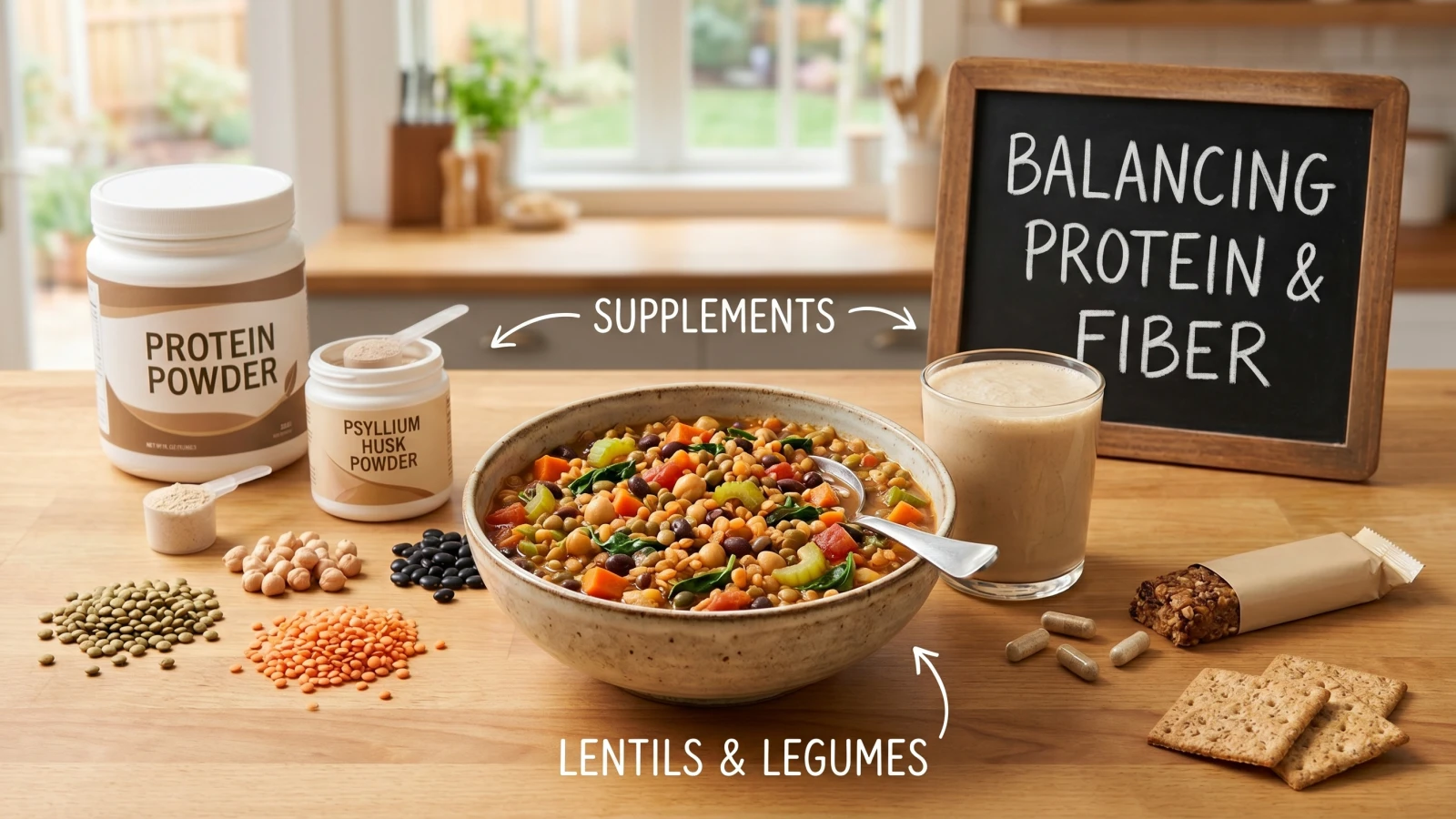
Product images were staged using AI for visual presentation purposes.
This article is for informational purposes only and is not a substitute for professional medical advice. Consult a healthcare provider before making significant changes to your diet.
At a glance
- High-protein foods are usually low fiber; high-fiber foods are usually low protein. The two goals conflict more than most people realize
- Legumes (lentils, chickpeas, edamame) and quinoa are the rare foods that deliver meaningful amounts of both
- A sample day hitting 150g protein and 30g+ fiber simultaneously is possible at 1,800–2,000 calories
- Whey protein closes the protein gap; psyllium husk closes the fiber gap. Each targets a specific deficit without conflicting
- Tracking both simultaneously is the only way to know where your actual gaps are
Why Hitting Both Is Genuinely Hard
Ask most people focused on nutrition what their goals are, and they’ll say some version of: eat more protein, eat more fiber, stay within my calorie budget. Reasonable goals. The problem is that the foods best suited to hitting your protein target and the foods best suited to hitting your fiber target barely overlap.
High-protein foods are almost universally low in fiber:
- Chicken breast: 31g protein, 0g fiber per 100g
- Eggs: 13g protein, 0g fiber each
- Greek yogurt: 10g protein, 0g fiber per 100g
- Whey protein powder: 25g protein, 0–1g fiber per scoop
- Tuna: 30g protein, 0g fiber per 100g
- Cottage cheese: 11g protein, 0g fiber per 100g
High-fiber foods are almost universally low in protein:
- Raspberries: 8g fiber, 1g protein per cup
- Broccoli: 5g fiber, 4g protein per cooked cup
- Oats: 4g fiber, 6g protein per ½ cup dry
- Apple: 4g fiber, 0g protein each
- Chia seeds: 10g fiber, 5g protein per 2 tbsp
This is the tension: the foods doing your protein work aren’t doing any fiber work, and vice versa. If you build your diet around protein (as most fitness-focused eating advice suggests), you’ll hit your protein numbers while your fiber intake stays dismally low. If you build it around whole plants (as most general health advice suggests), you’ll get fiber but struggle to reach meaningful protein targets.
Neither goal is optional. Protein preserves muscle mass in a calorie deficit; the research on this is unambiguous. Fiber stabilizes blood sugar, supports satiety, and feeds your gut microbiome. Neglecting either one has real consequences.
The Sweet Spot: Foods That Deliver Both
The short list of foods with a genuinely useful amount of both protein and fiber:
| Food | Serving | Protein | Fiber | Calories |
|---|---|---|---|---|
| Lentils (cooked) | 1 cup | 18g | 16g | 230 |
| Edamame (shelled) | 1 cup | 17g | 8g | 188 |
| Chickpeas (cooked) | 1 cup | 15g | 12g | 269 |
| Black beans (cooked) | 1 cup | 15g | 15g | 227 |
| Quinoa (cooked) | 1 cup | 8g | 5g | 222 |
| Green peas (cooked) | 1 cup | 8g | 9g | 134 |
| Tempeh | 3 oz | 15g | 4g | 160 |
| Tofu (firm) | ½ cup | 10g | 1g | 94 |
Legumes are the anchor. A cup of lentils gives you more fiber than most people get in an entire day, alongside 18g of protein that’s only slightly lower in quality than animal protein (and easily complemented by other sources). If you eat legumes at least once a day, you’ve solved a large part of the balancing problem.
Edamame is underrated. Shelled edamame — either fresh or frozen — is one of the most convenient high-protein, high-fiber snacks available. It requires no cooking (buy it frozen, microwave for 3 minutes), and a cup delivers 17g of protein and 8g of fiber for under 190 calories. It’s complete protein, meaning it contains all essential amino acids.
Green peas belong in more meals. A cup of cooked peas delivers 8g of each (protein and fiber) for 134 calories. Add them to rice dishes, curries, soups, and pasta.
A Sample Day: 150g Protein + 30g Fiber, ~1,900 Calories
This isn’t a meal plan to follow literally; it’s a demonstration that the targets are achievable simultaneously without heroic effort.
Breakfast — ~500 cal | 40g protein | 9g fiber
- ½ cup dry rolled oats cooked with water → adds 4g fiber
- 1 scoop whey protein stirred in → adds 25g protein
- 1 tbsp ground flaxseed → adds 4g fiber
- 1 cup raspberries → adds 1g protein, 8g fiber
Lunch — ~550 cal | 45g protein | 12g fiber
- 1 cup cooked lentils (18g protein, 16g fiber)
- 4 oz canned salmon or tuna mixed in (27g protein)
- Side of roasted broccoli and cherry tomatoes
Snack — ~200 cal | 18g protein | 8g fiber
- 1 cup shelled edamame (17g protein, 8g fiber)
Dinner — ~600 cal | 45g protein | 6g fiber
- 5 oz chicken breast or salmon (35g protein)
- ½ cup cooked chickpeas (8g protein, 6g fiber)
- Roasted vegetables (zucchini, bell pepper, onion)
Day total: ~1,850 cal | ~148g protein | ~35g fiber
The structural move here is pairing animal protein (which brings no fiber) with legumes (which bring both protein and fiber), so the legume handles double duty.
How to Supplement the Gaps Smartly
Even with a well-designed diet, there will be days (or entire stretches) where one or both targets are hard to hit. The right supplements for each gap are different, and they don’t conflict with each other.
Protein Gap → Whey or Casein Protein
If you’re consistently falling 20–40g short of your protein target, a protein shake is the most efficient solution. Whey protein is fast-absorbing and works well post-workout or with breakfast. Casein protein is slow-digesting and is often recommended before bed.
Both are essentially 0g fiber, which means they do nothing for your fiber gap, but they’re not supposed to. They handle the protein deficit cleanly without adding unnecessary calories from carbs or fat. See our complete guide to protein supplementation for a breakdown of types, timing, and what to look for when buying.
Fiber Gap → Psyllium Husk
If you’re consistently falling 10–15g short of your fiber target (likely if your diet is protein-heavy), psyllium husk is the most research-backed option. One tablespoon of bulk powder adds ~5g of soluble fiber for around 20 calories and essentially zero protein impact.
This psyllium husk powder mixes easily into water, a protein shake, or oatmeal. Taking it before your highest-carb meal does double duty: it adds fiber and blunts the blood sugar spike from that meal. Start with 5g daily and work up gradually to avoid the bloating that comes with rapidly increasing fiber intake.
These two supplements target completely different deficits. Protein powder fills the protein gap. Psyllium fills the fiber gap. You can use both simultaneously with no conflict — in fact, many people add psyllium directly to their protein shake.
Practical Tips That Actually Work
Batch cook legumes. The single biggest friction point with legumes is the cooking time. Solve it once a week: cook a large pot of lentils, black beans, or chickpeas on Sunday and use them throughout the week. A cup of cooked lentils keeps for 5 days in the refrigerator.
Add protein powder to oatmeal. Oatmeal gives you 4g of fiber per half cup, but only 6g of protein — not enough to make breakfast anchor your protein goal. Stir a scoop of whey into the bowl after cooking (not while it’s boiling, which denatures the protein and affects texture). You get 4g of fiber and 25g+ of protein from one meal.
Use edamame as your default snack. Swap whatever you’re currently snacking on for edamame. It’s faster to prepare than almost anything else and delivers a 2:1 protein-to-fiber ratio at relatively low calories.
Pre-meal psyllium before dinner. Most people front-load their protein at dinner (large portion of meat) and neglect fiber. Taking 5g of psyllium in a glass of water 15–20 minutes before dinner adds fiber, reduces how hungry you arrive at the meal (which reduces how much you eat), and blunts the post-meal glucose spike.
Track both numbers. This is the part most people skip. If you’re only tracking calories or only tracking protein, you have a blind spot. Tracking fiber alongside protein shows you exactly which gap exists on any given day and tells you whether you need more legumes, more protein powder, or more psyllium. You can’t optimize what you don’t measure.
Track Both with Free Calorie Track
Free Calorie Track tracks protein and fiber simultaneously for every food you log, alongside calories, carbs, and fat. The daily totals update in real time, so you can see exactly where you stand against both targets before making your next meal decision.
Understanding your macros, including fiber, together is the only way to stop optimizing for one goal at the expense of the other. If you haven’t set a calorie and protein target yet, start with a TDEE calculator.
👉 Start tracking free → — no account required
Related Articles
Psyllium Husk: Benefits and How to Use It
Dosing, timing, and what the research actually says
Protein Supplements: Who Actually Needs Them
Types, timing, and how much you actually need
High Fiber Foods: Complete List
Fiber per serving for every major food category
High Protein Low Calorie Foods
Complete list with macros per 100g