Psyllium Husk: Benefits, When to Use It, and How Much
Published: May 26, 2026
Contains affiliate links — we earn a small commission if you buy through them, at no extra cost to you. We only recommend products we genuinely use.
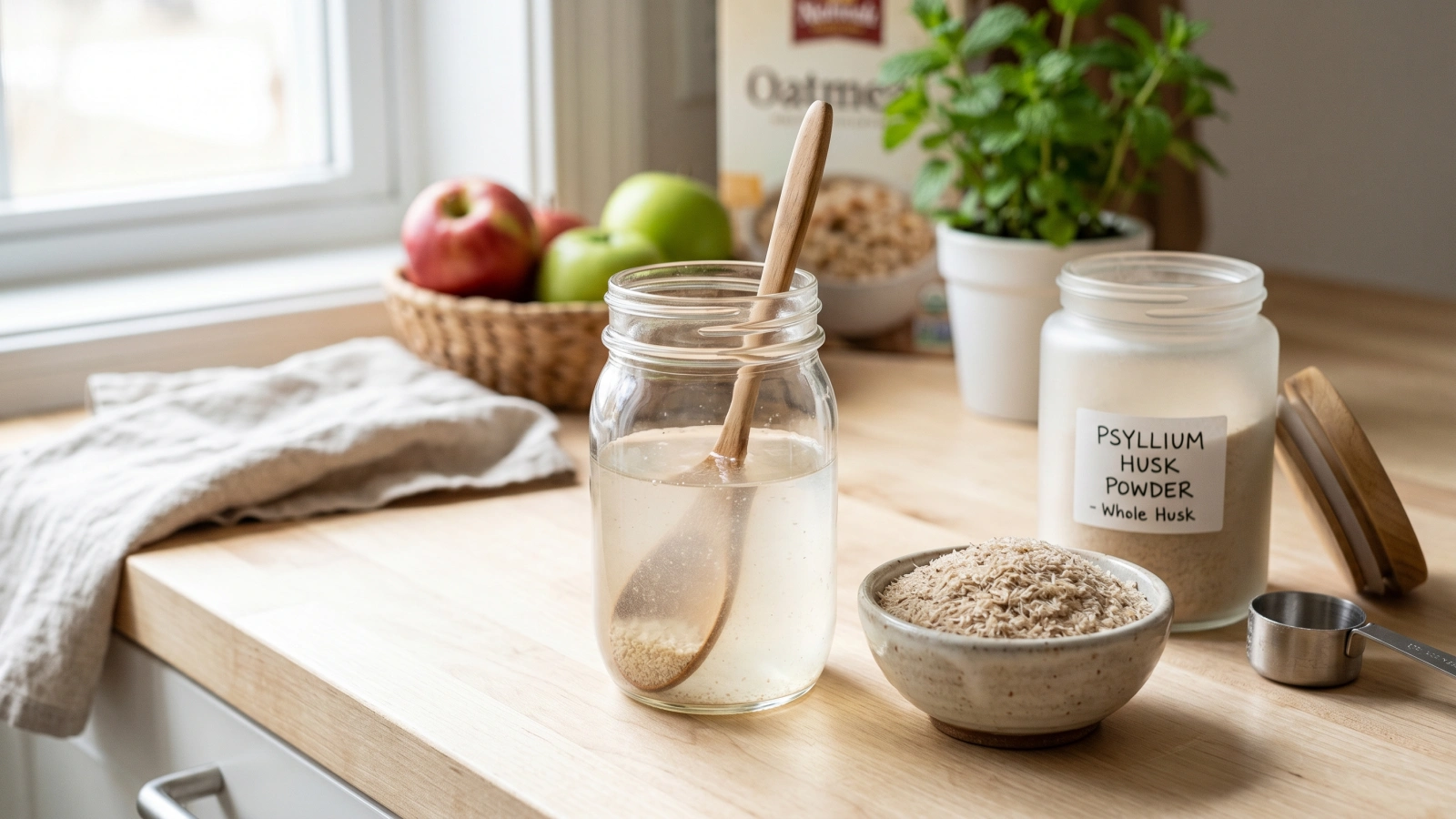
Product images were staged using AI for visual presentation purposes.
This article is for informational purposes only and is not a substitute for professional medical advice. Consult a healthcare provider before making significant changes to your diet or supplement routine.
At a glance
- Psyllium husk is a soluble fiber that forms a gel in your gut, slowing digestion and blunting blood sugar spikes
- Research supports benefits for LDL cholesterol, blood sugar control, satiety, and digestive regularity
- Start with ~5g per day and increase gradually to avoid GI discomfort
- Mix into a protein smoothie, yogurt, or oatmeal. You don't have to chug it in plain water
- Best used as a supplement to a whole-food diet, not a replacement for it
Most people have a vague sense that they probably aren’t getting enough fiber. The recommendation is 25–38g per day; the average American gets around 15g. If your diet skews toward protein-rich foods (chicken, eggs, Greek yogurt, protein shakes), you’re almost certainly on the low end, because those foods contain essentially no fiber.
That’s more or less where I was. I wasn’t having obvious digestive issues. I just had a nagging suspicion that my diet was missing something. I started taking psyllium husk without clear expectations; I wasn’t trying to fix a specific problem.
What I noticed was subtle. I couldn’t point to any single thing and say “that’s the psyllium.” But I just feel better day-to-day in a diffuse, generalized way that’s hard to attribute to anything specific. I’m not going to overclaim it. But if you eat reasonably well and suspect your fiber intake is lower than it should be, psyllium is an exceptionally low-effort way to close that gap. One tablespoon in your morning smoothie. That’s it.
What Is Psyllium Husk?
Psyllium husk comes from the seeds of Plantago ovata, a plant cultivated primarily in India. It’s been used medicinally for centuries and is the active ingredient in Metamucil and similar fiber supplements.
What makes it particularly useful is what happens when it hits water: psyllium absorbs liquid and forms a thick, viscous gel. That gel is the mechanism behind most of its benefits. It slows how quickly food moves through your digestive tract, creates a physical barrier that blunts glucose absorption, and adds bulk that helps move waste through your colon.
Psyllium is primarily soluble fiber, though it contains a small amount of insoluble fiber as well. If you want to understand the difference, our high fiber foods guide covers both types in detail. The short version: soluble fiber is most relevant for blood sugar control and cholesterol; insoluble fiber is most relevant for regularity.
Research-Backed Benefits
Blood Sugar Control
When you eat carbs, your blood sugar rises, and how fast it rises matters. A sharp spike is followed by a sharp drop, which leaves you tired, hungry, and reaching for more food sooner than you should be. Psyllium slows that process down. The gel it forms in your gut creates a kind of physical barrier that slows how quickly carbohydrates get absorbed into your bloodstream, which flattens the spike.
Multiple clinical trials have shown this effect in real people, and a large 2015 review of 35 studies confirmed it: psyllium taken before meals consistently reduced post-meal blood sugar compared to a placebo. The effect was strongest in people who already had elevated blood sugar, but it showed up across the board.
LDL Cholesterol
Your liver makes bile acids using cholesterol, which is a normal part of digestion. Usually, your body recycles those bile acids after they’re used. Psyllium’s gel intercepts them and carries them out instead, so your liver has to pull more cholesterol from your bloodstream to make a fresh batch. The result is lower LDL (“bad”) cholesterol.
This mechanism is well-established enough that the FDA approved a heart disease risk reduction claim for psyllium in 1998, one of the very few dietary fibers to receive that designation. Research consistently shows LDL reductions of 5–10% with regular use, which is meaningful if your numbers are already borderline.
Staying Full Longer
Psyllium absorbs water and expands in your stomach, and that takes up space. The physical result is feeling fuller, without adding meaningful calories (about 20 per tablespoon). Studies have found that people who take psyllium before meals eat less at that meal and stay satisfied longer afterward.
If you’re trying to eat less without feeling miserable about it, this is one of the more practical tools available. It doesn’t suppress appetite through chemicals; it just gives your stomach something to fill up on before the food arrives.
Digestive Regularity
This is the most familiar benefit, and it’s real. Psyllium adds bulk and water to stool, which makes things move more easily and consistently. What most people don’t realize is that it works in both directions: it can help with both constipation and loose stools, because the gel effect normalizes consistency either way.
A 2022 review of 16 clinical trials found psyllium to be the most effective fiber type for chronic constipation. For people with IBS, a large randomized trial published in the BMJ and a separate 2014 review both found that soluble fiber like psyllium helped significantly, while insoluble fiber like wheat bran did not.
Who Should Consider Psyllium
People consistently falling short of their fiber goal. The daily fiber target is 25–38g, and most adults get fewer than 15g. If your diet doesn’t include a lot of legumes, vegetables, and whole grains, psyllium can close the gap without requiring a complete dietary overhaul. See our full high fiber foods list to see how your current intake stacks up.
People managing blood sugar. Whether you’re prediabetic, diabetic, or simply trying to avoid energy crashes, taking psyllium before carbohydrate-heavy meals has a measurable impact on post-meal glucose. This makes it particularly relevant for people who eat moderate-to-high carb diets and want to blunt the metabolic impact.
Anyone on a calorie deficit. The satiety effect is real and practical. If you’re consistently hungry on a reduced-calorie diet, pre-meal psyllium is worth trying before reaching for more aggressive interventions.
People on GLP-1 medications. Ozempic, Wegovy, and similar drugs reduce appetite significantly, which means less food overall — and less fiber. If you’re eating 900–1,200 calories a day and prioritizing protein (which you should be), fiber is almost certainly an afterthought. A tablespoon of psyllium in your morning smoothie adds 5g of fiber for 20 calories and requires no extra meal planning. See our guide on protein tracking on GLP-1 for the broader picture of how to manage nutrition on these medications.
People on high-protein diets. Chicken, eggs, Greek yogurt, whey protein — these foods have essentially no fiber. If your diet is built around hitting a protein target, you’re almost certainly falling short on fiber without realizing it. Psyllium closes that gap without adding carbs, fat, or meaningful calories, and it doesn’t interfere with protein absorption. It’s the cleanest way to cover both bases at once. See our guide on balancing protein and fiber for the full picture.
People with high LDL cholesterol. Combined with a low-saturated-fat diet, regular psyllium supplementation produces clinically meaningful LDL reductions. It’s not a replacement for medication when medication is indicated, but it’s a legitimate dietary intervention.
How to Take It: Timing and Dosing
Starting Low and Working Up
This is the most important practical point: start with 5g per day (about 1 teaspoon of powder or 3–4 capsules) and increase gradually. Jumping straight to 15g when your gut isn’t adapted to it will cause bloating and gas. Work up by 5g per week until you reach your target.
| Goal | Suggested Dose | Timing |
|---|---|---|
| Digestive regularity | 5–10g once daily | Morning, with breakfast |
| Blood sugar control | 5–10g before each main meal | 15–30 minutes before eating |
| Satiety/weight loss | 5–10g before meals | 15–30 minutes before eating |
| LDL reduction | 10–15g spread across the day | With meals |
Water Is Non-Negotiable
Psyllium must be taken with a large glass of water (at least 8 oz / 240ml) and you should drink additional water throughout the day. The gel formation requires water. Without enough hydration, psyllium can actually cause constipation rather than relieve it. In rare cases, taking psyllium with insufficient water has caused esophageal obstruction. Take it seriously.
Powder vs. Capsules
Both work, but bulk powder is significantly more cost-effective and easier to adjust the dose. Capsules are more convenient for travel or if you dislike the texture. This is the psyllium husk powder I use — unflavored, no added sugar, and it disappears into a smoothie without any noticeable taste. Buying in bulk is also dramatically cheaper per gram than capsules or single-serve packets. It thickens quickly, so drink it within a few minutes of mixing.
What to Look For When Buying
- No added sugar. Many branded fiber products (including flavored Metamucil) contain significant added sugar or artificial sweeteners. Plain psyllium husk powder has neither.
- High psyllium percentage. Look for 100% psyllium husk or psyllium husk powder, not “psyllium seed” (lower fiber content).
- Bulk powder over single-serving packets. The per-gram cost is much lower.
Ways to Take It
The standard recommendation is to mix psyllium into a glass of water and drink it immediately. That works, but it’s not the only option, and for a lot of people it’s not the most palatable one.
In a protein smoothie (recommended). Stirring a tablespoon into your morning protein shake is one of the most practical approaches. The liquid in the smoothie counts toward your hydration requirement, the other ingredients mask any texture, and it pairs naturally with a meal that’s already low in fiber. This is how I take it. Drink within a few minutes of mixing — psyllium thickens noticeably as it sits.
In plain water. The classic method. Mix into at least 8 oz of water, stir well, and drink promptly before it gels. If this approach works for you, it’s simple. Follow up with another full glass of water.
Stirred into yogurt or oatmeal. Psyllium blends easily into Greek yogurt or oatmeal without dramatically changing the texture if you use a small amount (1 tsp). A natural fit if you’re already eating these as part of your routine.
In juice or milk. If plain water is unpalatable, any liquid works. Keep the volume at least 8 oz and drink promptly.
What to avoid. Don’t add it to food well before eating — it will gel into whatever you’re making. And don’t take it dry or with minimal liquid; that’s when you run into problems. The common thread across every method is adequate liquid and drinking promptly after mixing. The smoothie approach handles both naturally, which is why it tends to stick as a habit.
Cautions and Drug Interactions
Medication timing. Psyllium’s gel can interfere with the absorption of medications taken at the same time. Take any medications at least 2 hours before or after taking psyllium. This applies to statins, diabetes medications, thyroid medications, and others. If you take multiple medications, check with your pharmacist.
Not a replacement for whole-food fiber. Psyllium delivers soluble fiber efficiently, but whole foods provide a diversity of fiber types, fermentable fibers that feed your gut microbiome, vitamins, minerals, and phytonutrients that a supplement cannot replicate. The goal should be to supplement a diet that already includes legumes, vegetables, and whole grains, not to replace them.
Allergies. Rare but documented. Some people have psyllium allergies, including occupational asthma in healthcare workers exposed to it regularly. If you notice any allergic symptoms, discontinue use.
Kidney disease. If you have kidney disease, check with your doctor before significantly increasing fiber intake, including psyllium.
How Psyllium Fits Into a High-Protein Diet
One underappreciated benefit of psyllium is that it fills the fiber gap in high-protein diets without conflicting with protein intake. High-protein foods like chicken, eggs, Greek yogurt, and whey protein contain essentially no fiber. If your diet is built around protein sources, you’re likely getting very little fiber from food alone.
Psyllium lets you hit your protein targets without compromising on fiber. Add a tablespoon to your morning shake or have it before your highest-carb meal of the day. For a detailed breakdown of how to structure a diet that hits both targets simultaneously, see our guide on balancing protein and fiber.
Track Fiber with Free Calorie Track
Free Calorie Track tracks fiber alongside calories, protein, carbs, and fat for every food you log, including fiber from supplements if you add psyllium as a custom food. The daily breakdown shows your running fiber total in real time so you can see exactly how far you are from your goal before you decide whether to supplement.
Understanding your macros and fiber together gives you a much more complete picture of your diet than calories alone.
👉 Start tracking free → — no account required
Related Articles
How to Get Enough Protein AND Fiber
Hit both targets simultaneously without going crazy
High Fiber Foods: Complete List
Fiber per serving for every major food category
Protein Supplements: Who Actually Needs Them
Research-backed guide to types, timing, and dosing
Free TDEE Calculator
Find your daily calorie target