ZELUS Weighted Vest Review: Budget Pick for Rucking
Published: March 23, 2026
Contains affiliate links — we earn a small commission if you buy through them, at no extra cost to you. We only recommend products we genuinely use.
At a glance
- The ZELUS weighted vest is an excellent budget option at $50-90
- Comfortable, low-profile design that fits under jackets
- Great for rucking, weighted pull-ups, push-ups, and bodyweight exercises
- Limited to 30 lbs max and not adjustable (can’t add/remove weight)
- Recommendation: Start with a backpack at 10-15% of body weight, then buy the vest at your target weight (~20% of body weight)
If you’re new to rucking and weighted training, start by reading our Complete Guide to Rucking and Weighted Vest Training to learn the fundamentals, benefits, and how to get started safely.
This article focuses specifically on the ZELUS Weighted Vest—my experience using it for rucking, pull-ups, and push-ups, and whether it’s worth buying.
ZELUS Weighted Vest: My Experience
After using the ZELUS Weighted Vest for several months for rucking, weighted pull-ups, and push-ups, here’s my honest take.
🎯 Quick Verdict
Best for: Budget-conscious athletes who want a comfortable, versatile vest for rucking and bodyweight exercises
Price: ~$50-$90 (depending on weight)
Weight options: 6, 12, 16, 20, 25, 30 lbs
Overall rating: 9/10 for the price
What I Love About the ZELUS Vest
1. Comfort & Fit
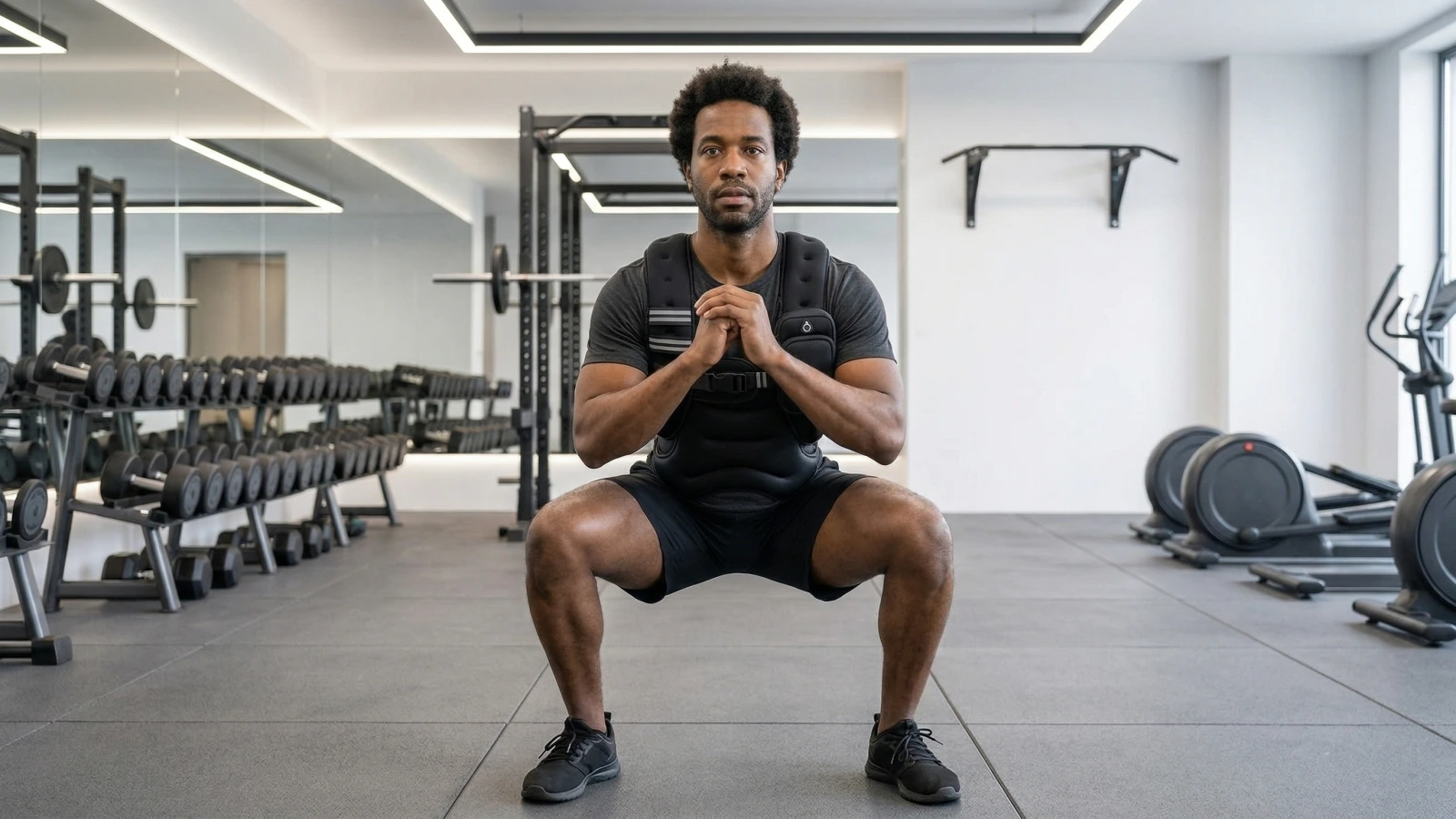
The ZELUS vest is genuinely comfortable. The neoprene material molds to your torso without feeling restrictive. I’ve worn it for 5+ mile rucks and never experienced chafing or pressure points.
One size fits all — and it actually works. The adjustable shoulder and waist straps make it easy to dial in a snug fit for different body types.
2. Low-Profile Design
One of the best features: it doesn’t look intense. It’s not a tactical-looking plate carrier. It’s sleek and low-profile enough to wear around the neighborhood without drawing attention.
Fits under jackets and sweatshirts — this is huge for winter rucking. I can layer a hoodie or jacket over the vest when it’s cold, and it doesn’t look bulky or restrict movement.
3. Even Weight Distribution
The vest uses iron sand for weight, which distributes evenly across your torso. Unlike plate-loaded vests (where weight is concentrated in front/back plates), the ZELUS feels balanced.
No forward hunch or backward pull — the weight sits naturally on your shoulders and doesn’t throw off your posture. This makes it ideal for long rucks where poor weight distribution would cause fatigue or discomfort.
4. Doesn’t Restrict Movement
The vest has shoulder straps only in the front (no bulky chest strap). This design:
- Keeps you cooler (less fabric = less sweat)
- Doesn’t restrict your breathing
- Allows full range of motion for pull-ups — the straps don’t dig into your shoulders or limit your upward pull
This is a game-changer if you plan to use the vest for calisthenics. Some vests have wide chest straps that restrict shoulder mobility. The ZELUS doesn’t.
5. Front Strap Keeps It Secure (Mostly)
The adjustable front strap (between the shoulder straps) does a good job keeping the vest from bouncing or sliding off your shoulders during most movements.
However: The strap won’t make the vest super tight against your chest. This is actually good for comfort and breathability, which is why I prefer vests to backpacks—they’re more comfortable and sustainable for me during long training sessions.
But the tradeoff is that the vest isn’t ideal for running (can bounce slightly) and can sag a bit during push-ups when your torso is horizontal. For walking (rucking) and pull-ups, it’s perfectly secure.
6. Functional Pockets
The vest has a removable zippered pouch that’s perfect for:
- Phone
- Keys
- ID/credit card
- Energy gels (for long rucks)
It’s not a huge pocket, but it’s surprisingly useful for essentials.
What Could Be Better
1. Not Adjustable—Can’t Add or Remove Weight
The ZELUS vest comes in fixed weights (6, 12, 16, 20, 25, 30 lbs). Unlike plate-loaded vests, you can’t adjust the weight.
This means:
- If you start with a 20 lb vest and want to progress to 25 lbs, you need to buy a second vest
- You can’t reduce weight for easier sessions without buying a lighter vest
- No flexibility for different exercises (you might want 30 lbs for rucking but only 15 lbs for pull-ups)
Solution: Start with a backpack and books to find your ideal weight, then buy a vest at that weight. Or, if you want adjustability, invest in a plate-loaded vest (though they cost 2-3x more).
2. Limited to 30 lbs
If you’re an experienced rucker or strength athlete, 30 lbs might feel limiting. Once you adapt, you’ll want to progress, and the ZELUS caps out at 30 lbs. For most people aiming for 20% of body weight, the 30 lb vest works well up to ~150 lbs body weight.
Solution: Upgrade to a plate-loaded vest that allows more weight, or focus on increasing distance/difficulty rather than weight.
3. Strap Doesn’t Make Vest Super Tight
As mentioned above, the front strap won’t cinch the vest tightly against your chest. This is great for comfort, but has tradeoffs:
✅ Good for:
- Long rucks (more comfortable, breathable)
- Weighted pull-ups (doesn’t restrict breathing)
- General walking and standing exercises
❌ Not ideal for:
- Running (vest can bounce slightly)
- Push-ups (vest sags a bit when horizontal)
- High-intensity movements (burpees, jumping)
Personally, I prefer the comfort for sustained rucking and pull-ups over the tighter fit some tactical vests offer. But it’s worth noting if you plan to do a lot of running or explosive movements.
Who Should Buy the ZELUS Vest?
✅ Perfect for:
- Beginners who have tested weighted training with a backpack and are ready to commit
- Budget-conscious athletes ($50-90 vs $200+ for premium vests)
- People who want a low-profile vest that fits under clothes
- Anyone doing weighted pull-ups or calisthenics (better than backpacks)
- Ruckers who stay in the 10-30 lb range
- Those who prioritize comfort over maximum tightness
❌ Not ideal for:
- Advanced ruckers who need 40+ lbs
- People who want adjustable weight (add/remove plates)
- Runners who need a super-tight fit with zero bounce
- Those doing primarily push-ups or explosive horizontal movements
Where to Buy
👉 ZELUS Weighted Vest on Amazon (affiliate link)
Available in 6, 12, 16, 20, 25, and 30 lb options.
My recommendation:
- Start with a backpack loaded with books or dumbbells at 10-15% of your body weight
- Train for 2-4 weeks to see if you enjoy weighted training
- Target progression: Work toward 20% of your body weight (e.g., 30 lbs for a 150 lb person, 36 lbs for a 180 lb person)
- Buy the vest at your target weight (this way you only buy once and don’t outgrow it quickly)
For example, if you’re 150 lbs:
- Start with a 15-20 lb backpack
- Progress over 8-12 weeks
- Buy a 30 lb ZELUS vest (20% of 150 lbs)
- This vest will last you for years at your target training weight
Track Your Weighted Vest Workouts
Track your rucking and weighted vest exercises in Free Calorie Track—the app automatically calculates calories for weighted vests and backpacks. See our complete rucking guide for training programs, calorie calculator, and detailed workout instructions.
Final Thoughts
The ZELUS Weighted Vest is an excellent budget option for rucking and weighted calisthenics. At $50-90, it’s a fraction of the cost of premium vests but offers similar comfort and functionality for most people.
Before you buy:
- Test weighted training with a backpack + books/dumbbells
- Make sure you enjoy it and will stick with it
- Decide on your target weight
Once you’re ready:
- The ZELUS offers great value for 10-30 lb training
- Comfortable, low-profile, and versatile
- Perfect for rucking, pull-ups, and bodyweight exercises
I personally prefer the comfort and versatility of vests over backpacks, even though backpacks burn slightly more calories. The ZELUS has been a reliable training tool for months, and I’d recommend it to anyone starting out with weighted training.
Next steps:
- Start with a backpack to test if you like weighted training
- If you commit, buy the ZELUS at your target weight
- Follow a structured rucking program
- Track your progress in Free Calorie Track
Related Articles
Complete Rucking Guide
Everything about rucking: benefits, training programs, and calorie calculator
What Are Calories?
Learn the basics of calorie tracking and energy balance
Calculate Your TDEE
Find your daily calorie burn to optimize training results
High Protein Low Calorie Foods
Fuel your rucking workouts with optimal nutrition
Sources: