The Pan I Switched to After My Nonstick Started Flaking
Published: April 30, 2026
Contains affiliate links — we earn a small commission if you buy through them, at no extra cost to you. We only recommend products we genuinely use.
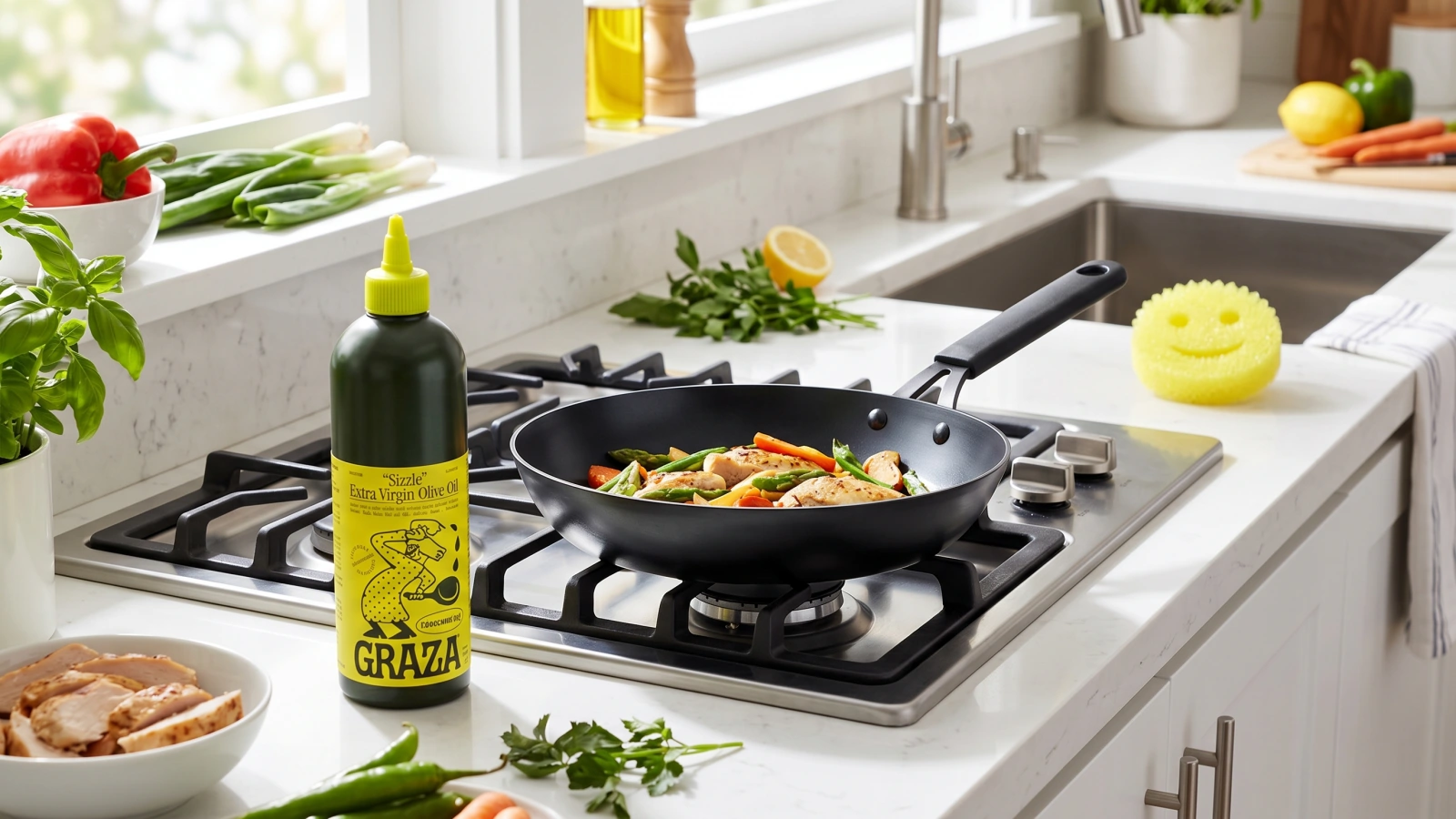
Product images were staged using AI for visual presentation purposes.
At a glance
- Great for anyone who wants to stop cooking on chemical coatings
- Best for: Searing, pancakes, anything high-heat. Gets better with age.
- Weak point: Eggs. It's fine, not magical. Scrambled eggs stick.
- Maintenance: No soap, dry after washing, rub with a little oil. That's it.
- Verdict: The best entry point into chemical-free cookware if you're willing to put in a little extra work
If you’ve ever stared at a scratched-up nonstick pan and thought “I’m definitely eating that coating,” this post is for you.
For me it wasn’t hypothetical. I was scrubbing an old nonstick pan and noticed flakes of the coating coming off on the sponge. That was enough. I started looking for alternatives, which led me down a rabbit hole of carbon steel, cast iron, and stainless, and eventually to the OXO Obsidian 10” Carbon Steel Frying Pan.
What is carbon steel, exactly?
It’s just metal. No coating, no chemicals, no secrets. It’s what professional kitchens have used for decades because it heats fast, handles high heat, and lasts basically forever. The tradeoff is that you have to take care of it, and it won’t perform like a Teflon pan right out of the box. Or ever, really.
What drew me to this particular pan is how well-designed it is for a first-time carbon steel user. It’s lightweight compared to cast iron, which matters more than you’d think when you’re cooking every day. But it’s thick and sturdy enough to distribute heat evenly, so you’re not getting hot spots. The factory seasoning gives you a real head start on that smooth, conditioned surface that makes carbon steel worth using. It also comes with a rubber grip for the handle, which is a small thing that turns out to be genuinely useful.
What it’s great at
Searing is where this pan shines. It gets ripping hot, holds that heat, and gives you a crust that a nonstick pan simply can’t match. Steaks, chicken thighs, salmon — anything that benefits from real contact with a very hot surface. (Conveniently, those are also some of the best high-protein, low-calorie foods you can cook.)
It also handles more delicate things better than you’d expect. Pancakes come out beautifully. And the more you use it, the better the surface gets, which is the opposite of every nonstick pan you’ve ever owned.
The weak point: eggs
Eggs are the honest test of any pan that isn’t genuinely nonstick.
Fried eggs work, but you need enough fat (olive oil or butter) and genuine patience. Let the egg fully set. Wait for that crispy, lacy brown layer on the bottom before you think about flipping. If you like a gently cooked fried egg with a perfectly tender white, this pan will frustrate you. You’ll end up overcooking the whites waiting for the egg to release cleanly.
Scrambled eggs come out tasting great but leave a layer caked onto the pan every time. This is just the deal.
We keep a Tramontina Professional 10” Nonstick Pan around for exactly these situations. It’s a great pan and we like it a lot, but we try not to reach for it unless we have to. That’s a personal call.
Cleaning and maintenance
Skip the soap. Carbon steel doesn’t need it, and over time it can strip the seasoning you’ve built up. Just water and a Scrub Daddy. The cold water trick is worth knowing: cold water makes the sponge firmer and more abrasive, which removes caked-on debris without scratching anything. For scrambled eggs specifically, scrape out the residue with a spatula first, then scrub.
After washing, dry the pan completely. Carbon steel rusts if you leave it wet. Then rub a small amount of oil over the surface before putting it away. This keeps it conditioned and as nonstick as it’s going to get.
For both cooking and maintenance, Graza’s high-heat cooking oil is what I use. It’s neutral, has a high smoke point, and unlike most pomace oils it’s not chemically refined, which feels right for a pan you bought specifically to get away from that stuff. Worth noting: avoid flaxseed oil for seasoning despite what the internet tells you. It builds up a layer that eventually flakes off, which defeats the whole point.
Who this pan is for
If you want true, effortless nonstick, you should probably just get a true nonstick pan. Despite what great marketing will tell you, carbon steel will never compete with true nonstick on the egg front. Sad but true.
But if you want cookware with no chemicals to shed, that gets genuinely better the longer you own it, and handles high-heat cooking better than any nonstick pan will, this is a great place to start.