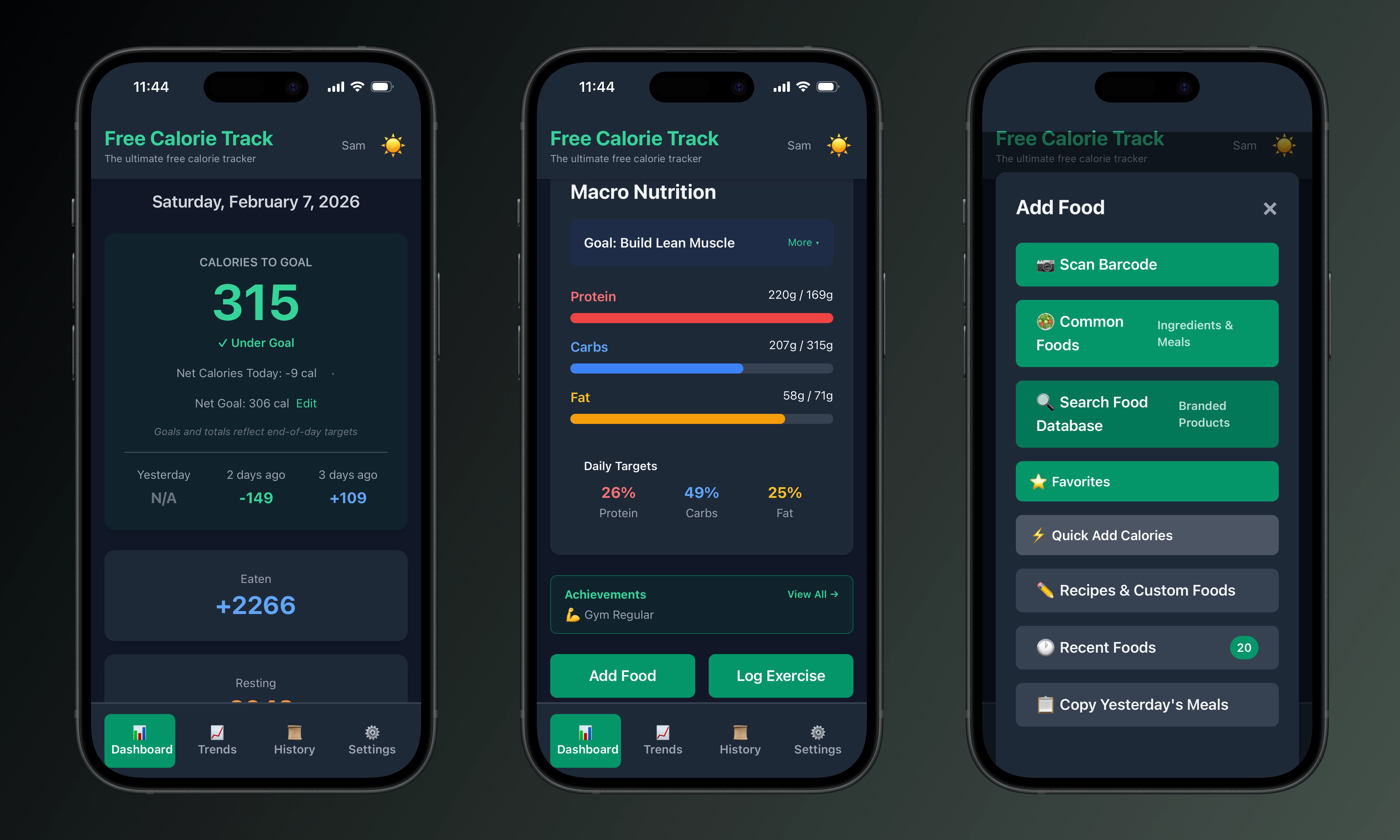
How the Protein Tracker Works
Set Your Profile & Goals
Enter your age, weight, height, and fitness goal. The app calculates your optimal daily protein target based on research-backed formulas.
Log Your Meals
Scan barcodes, pick from common foods, search branded products, create custom recipes, or describe a meal to AI. Protein is tracked automatically for each entry.
See Your Progress
Real-time progress bar shows how much protein you've consumed vs. your goal. Check weekly trends to see consistency over time.
Why Use Our Protein Tracker?
Completely Free
No paywalls, no premium tier, no subscription. All protein tracking features are free forever.
No Ads
Track your protein without interruptions. No banner ads, no video ads, no sponsored content.
No Account Required
Open the app and start tracking immediately. No email, no password, no sign-up friction.
Private & Secure
Your data stays on your device. No cloud sync, no server storage, no third parties accessing your nutrition data.
Spread Protein Across the Day, Not Just at Dinner
Most people eat 15g at breakfast, 20g at lunch, and 80g+ at dinner. The problem: muscle protein synthesis tops out at roughly 35–40g per meal. Getting there 3–4 times a day is significantly more effective than one large evening hit — even at the same daily total.
Less effective
Hits the daily target, but most of the dinner protein can't be used efficiently.
More effective
Each meal triggers a full muscle protein synthesis response — same total, better use.
What the tracker shows you
- ✓Per-meal protein as you log
- ✓Daily goal progress in real time
- ✓7-day weekly protein averages
- ✓Trends that reveal where you consistently fall short
Why Protein Is Harder to Eyeball Than Calories
Calorie-dense foods tend to look different — a bag of chips vs. a salad is obvious. Protein is invisible. Two portions that look identical can have wildly different protein content, which is exactly why tracking it specifically matters.
Same serving size, very different protein
Common protein underestimates
"I had protein at every meal"
A small piece of chicken, two eggs, some cheese — that's probably 60–80g total. Most active people need 120–180g. You'd never know without tracking.
Protein bars vary wildly
Some bars have 20–25g protein. Others marketed as "protein bars" have 8g. Scanning the barcode takes one second and tells you exactly what you're getting.
Restaurant portions aren't standard
A "grilled chicken entrée" could be 120–400g of meat depending on the restaurant. The AI photo feature gives a far better estimate than guessing.
Ready to Hit Your Protein Goals?
Start tracking protein for free. No sign-up, no credit card, no catch.
Launch Free Protein TrackerOpens instantly in your browser—no app store download required